
Choose one reader, one question and one action they need to take. Write the answer first, turn the follow-up questions into headings, then add an example that makes the answer usable. Stop when that job is done.
Keep the question smaller than the topic
You have a good question in your inbox. Then you open a draft and turn it into a huge topic. A reply you could explain clearly becomes a post you cannot finish.
The fix starts before the outline. Keep the original task in view. "Tell me about blog backups" is a topic. "What should I save before moving my blog?" gives the reader a decision and gives you a boundary.
A real question shows that one person needed an answer. It does not prove search demand, and you do not need to pretend it does. If you want more ideas first, use the published guide on what to write when you have nothing to say.
Write the reader and the job in one sentence
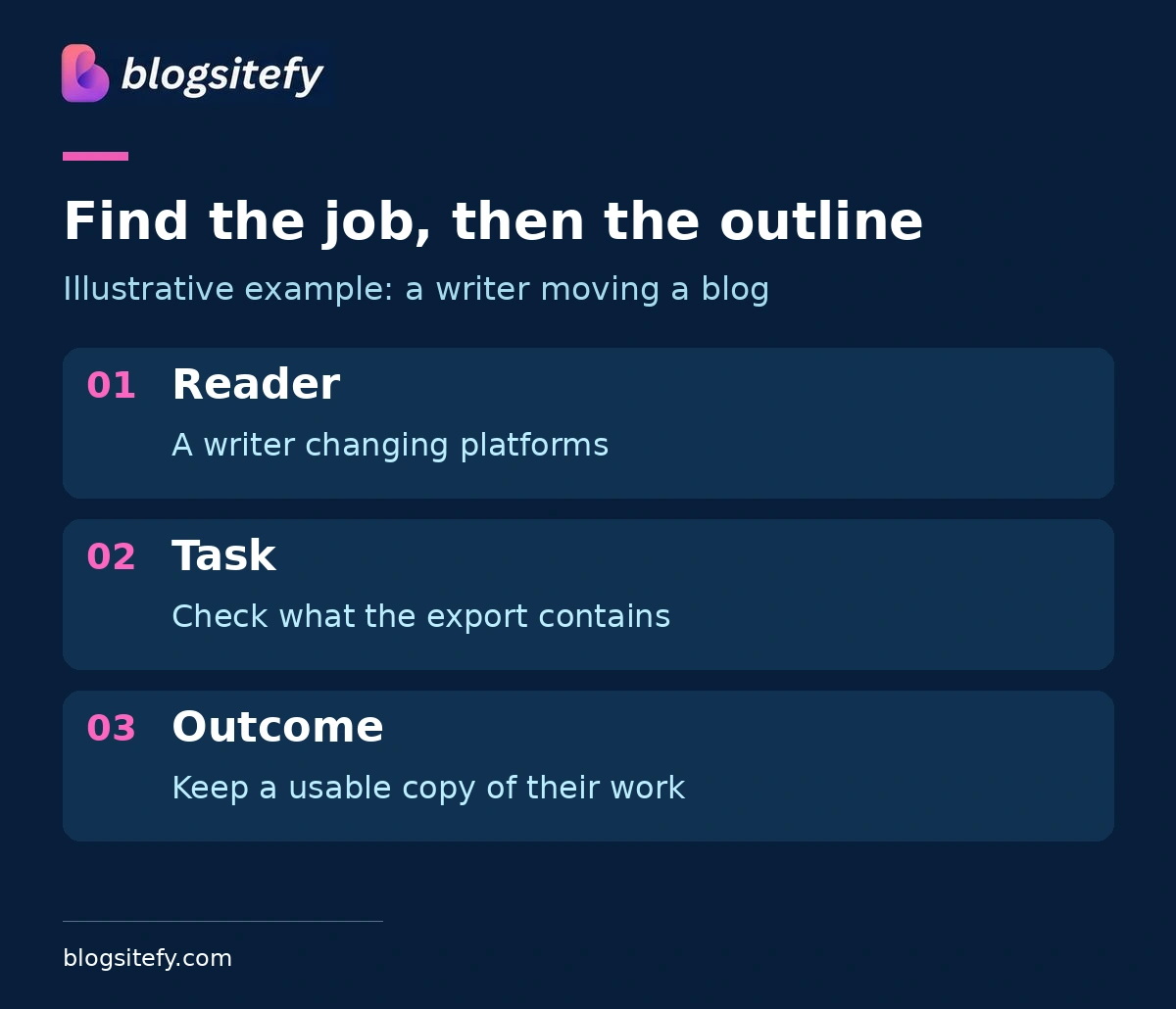
Use this working sentence: "A reader who is [in this situation] needs to [take this action] so they can [reach this outcome]." This is a planning aid, not a line you have to publish.
For an illustrative example: "A writer moving to a new blogging platform needs to check what their export contains so they can keep a usable copy of their work." Now the post has a job. It does not need a history of blogging or a list of every platform.
GOV.UK uses a who, task and reason format when planning its own content. The same discipline is useful here: describe the reader's need before deciding how long the answer should be.
Give the answer before the background
Draft a short answer before any introduction. In our example: "Save your posts, images and a list of published addresses. Open the export and check a sample before relying on it. An export file is not proof that everything you need is inside."
Then list what a reader must know to act on that answer. For this example, the outline could be: make an inventory; export the content; save images separately if the export does not include them; open a sample; keep the address list for the move.
Those are useful headings because each one advances the task. "Why backups matter in the modern world" does not. Keep the background that changes a decision; cut the rest.
Illustrative editing plan:
Reader needs to know | Useful heading |
What should I keep? | Make an inventory |
Did the export work? | Open a saved sample |
What about the old addresses? | Keep the published URL list |
Add one example and mark its limits
A worked example makes an instruction easier to use. Show a tiny sample inventory: article title, current address, text saved, images saved, checked. That gives the reader something to copy.
Do not claim an export contains images, comments or metadata unless you have checked that platform's current documentation or tried the export. Where the answer depends on the tool, say what to check. Specific limits are more helpful than a confident general promise.
If the question came from a private message, remove personal details and do not publish the message or identify the sender without permission. An anonymized planning note is enough to begin.
Finish with a usable next step
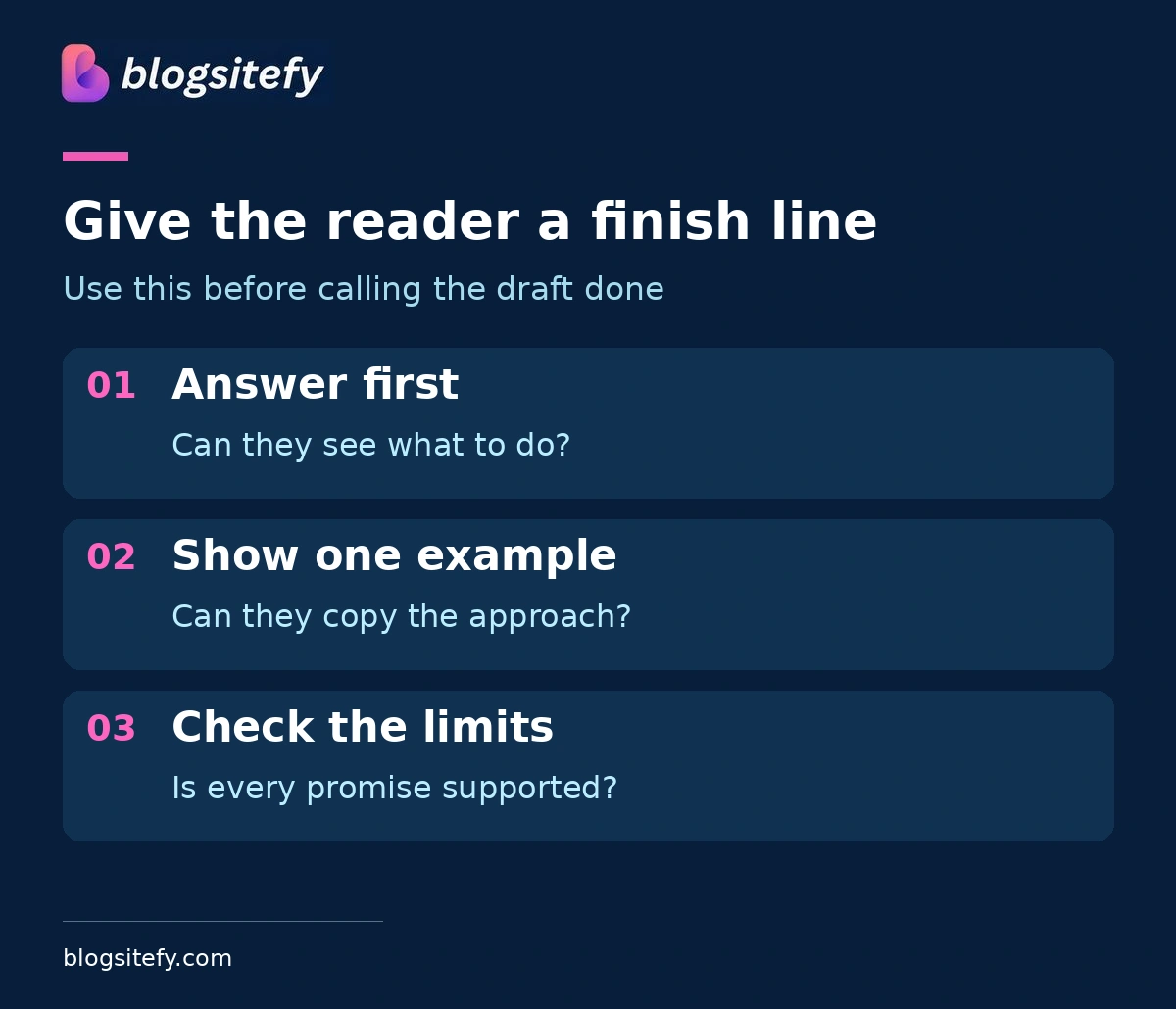
Before calling the draft done, ask: can the reader perform the task without opening another guide to fill a basic gap? Check every instruction, label any hypothetical example and cite the source behind an external claim.
Google's people-first guidance asks whether readers leave having learned enough to achieve their goal. It does not prescribe a word count. Some questions need a short answer; others need screenshots and several steps.
For this example, the next step is simple: save one post and its images, then open the saved files. Link to the full backup checklist for the broader task. You have a useful post, not a small question stretched into an encyclopedia.
Sources
Related reading
Frequently asked questions
Only if the answer is useful to the audience. If two paragraphs settle it, publish a short answer or include it in a relevant existing post.
Keep the meaning, but remove private details. Ask permission before quoting or identifying a person from a private conversation.
No fixed count makes an answer useful. Write enough to complete the task, show necessary examples and explain important limits.
Link to or improve that post if it meets the same need. Write a separate post only when it adds a distinct answer or use case.
Share this post